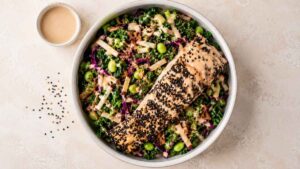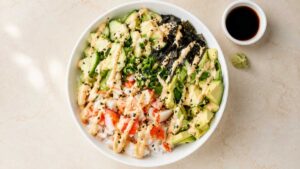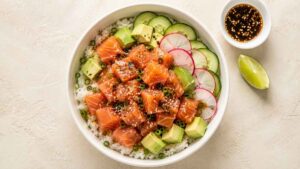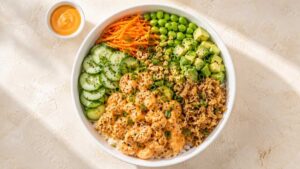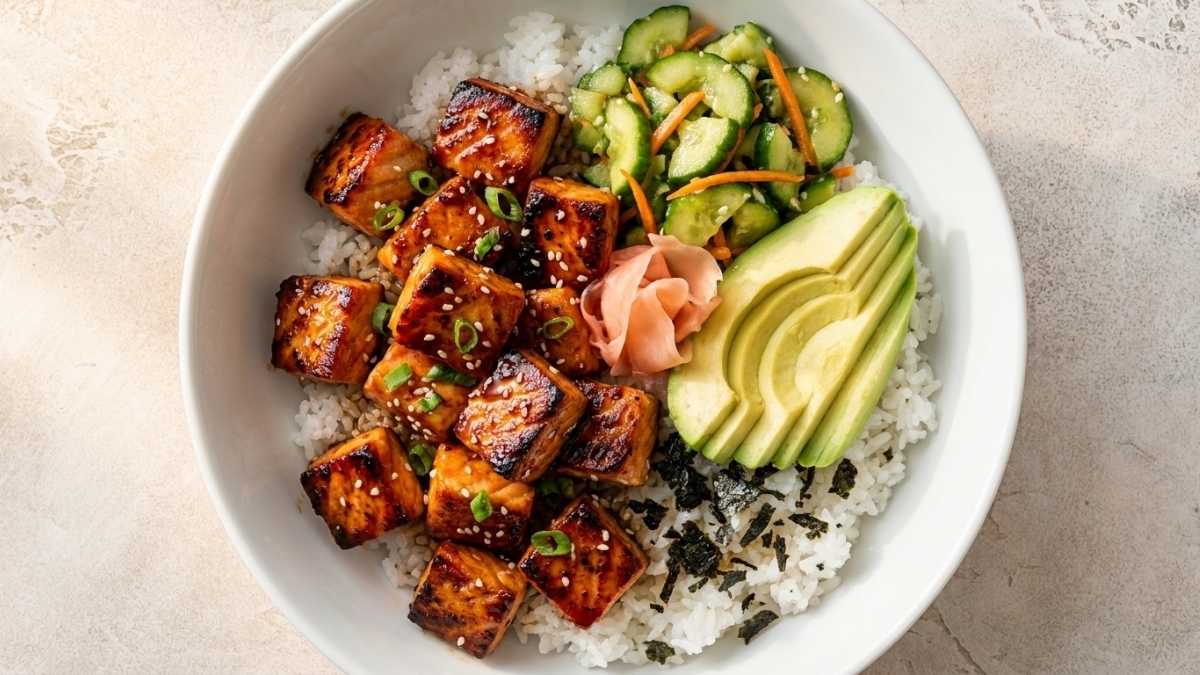
I used to think making sushi at home meant buying special fish and watching a dozen YouTube tutorials on rolling technique. Then I made this salmon sushi bowl and realized I’d been overcomplicating dinner for years. It’s got everything I love about a sushi roll: tender marinated salmon, sticky rice, crunchy cucumber, all the toppings, minus the rolling mat.
My go-to move on a busy weeknight is anything I can marinate while I do something else, and this recipe fits that perfectly. I usually start the salmon marinating right after I get home from picking up my kids, then throw the rice on and let everything come together in about 40 minutes.
My youngest calls this “the fish candy bowl” because of the sweet soy glaze, and honestly, I don’t think that’s far off. The first time I made it, I remember standing at the stove watching the salmon caramelize in the pan and thinking it smelled better than most restaurant orders I’ve paid for. If you’ve been putting off homemade sushi because rolling seems like a hassle, this is the workaround, and it’s every bit as much a weeknight regular for me as my restaurant-style salmon poke bowl.
Jump To Section
Ingredients for Easy Salmon Sushi Bowl
Here’s what I use, plus a few swaps if your pantry looks different from mine. Nothing here is hard to find, and most of it keeps well if you want to make this a regular in your rotation, the same way I do with my sesame salmon bowl.
Allergen note: this recipe contains soy, sesame, and fish. If you use regular soy sauce instead of tamari, it will also contain gluten, stick with certified gluten-free tamari if you need this dish to stay gluten-free.
For the Salmon
- 3 tbsp tamari, naturally gluten-free (or regular soy sauce if that’s what you have, just know it’ll take the gluten-free swap off the table)
- 2 tbsp toasted sesame oil (I always use toasted, not regular, since the flavor is much stronger)
- 2 tbsp rice vinegar
- 1 tbsp fresh ginger, grated or finely minced
- 2 garlic cloves, grated or finely minced
- 1 tsp maple syrup
- 1/2 tsp red pepper flakes (optional, skip if you’re serving picky eaters)
- 1 1/2 lbs salmon fillets, skin removed, cut into 1-inch cubes (wild-caught if you can find it, the texture holds up better in the pan)
For the Rice
- 1 cup dry sushi rice (short-grain white or brown rice works too, just increase the water slightly)
- 1 1/4 cups water
- 1 tsp rice vinegar
For the Salad
- 1 cup cucumber, thinly sliced
- 1 cup carrots, thinly sliced
- A splash of rice vinegar, sesame oil, and grated ginger to toss with the veggies
For Serving (optional but recommended)
- 1 large avocado, thinly sliced
- 2 stalks green onion, thinly sliced
- 1 small package seaweed snack chips or nori sheets, crumbled
- Sesame seeds
- Pickled ginger
- Wasabi
Don’t Lose This Recipe
Step-by-Step Instructions
In my experience, the marinating time is what makes this salmon taste like something you’d order out, so don’t rush that part. Here’s how I put the whole bowl together.
Step 1: In a medium bowl, whisk together the tamari, sesame oil, rice vinegar, ginger, garlic, maple syrup, and red pepper flakes if using. Set aside 2 to 3 tablespoons of this marinade to drizzle over the finished bowls later. Add the cubed salmon to the rest and let it sit for about 20 minutes while you start the rice and salad.
Step 2: Rinse the rice in a fine mesh strainer until the water runs clear. This step matters more than people think, skip it and your rice turns gummy instead of fluffy. Transfer the rinsed rice to a small saucepan with the water and rice vinegar. Bring to a strong simmer over medium-high heat, then reduce to low, cover, and cook for about 15 minutes, until the water is absorbed. Turn off the heat and let it steam, covered, for another 10 minutes.
Step 3: While the rice cooks, toss the cucumber and carrots with a splash of rice vinegar, sesame oil, and grated ginger. Prep your toppings so everything is ready to go once the salmon is done.
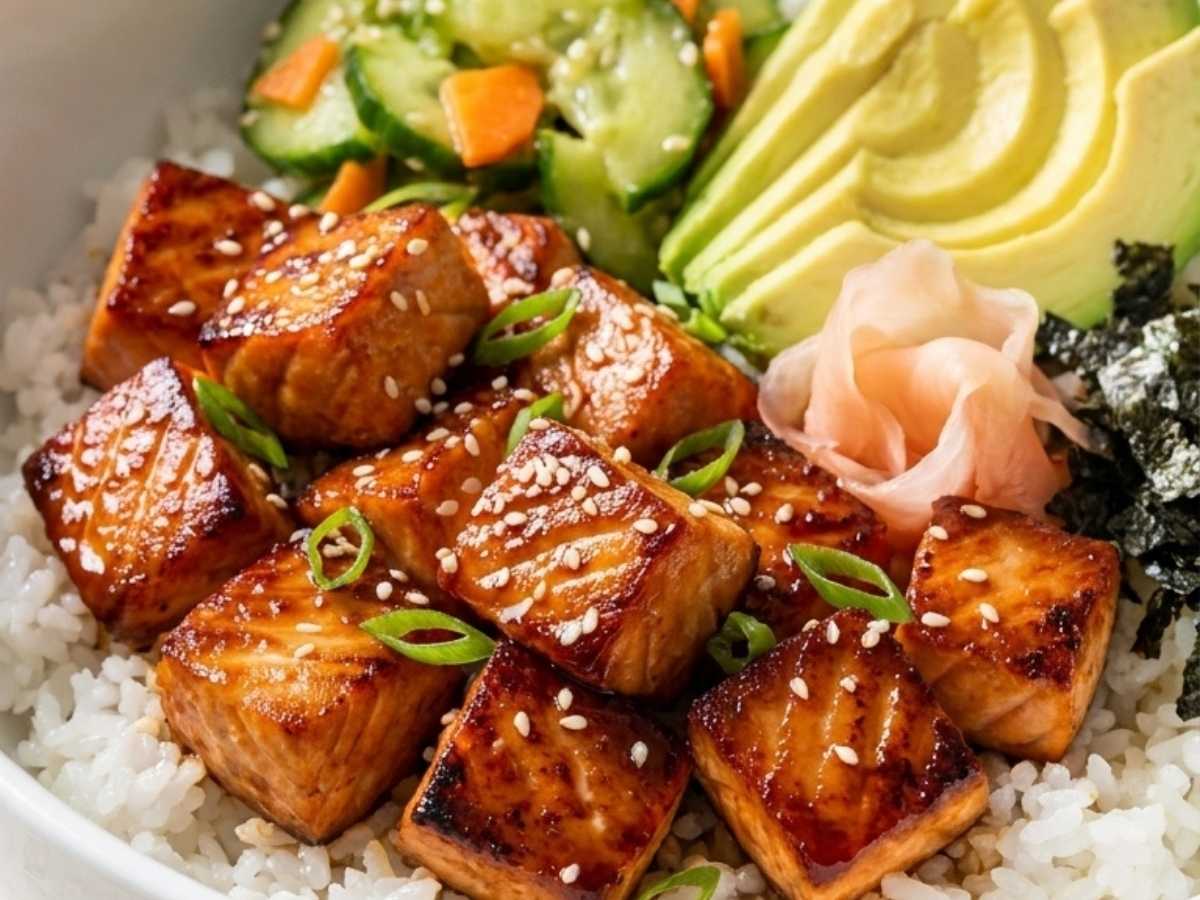
Step 4: Heat a large, well-seasoned skillet over medium-high heat. Once hot, add the salmon cubes with a fork or slotted spoon, leaving the extra marinade behind in the bowl. Cook for 5 to 6 minutes total, flipping occasionally, until the edges caramelize and the salmon reaches 145°F inside.
Step 5: Divide the rice between bowls and top with the salmon, cucumber salad, and whatever toppings you like: avocado, green onion, crumbled seaweed, sesame seeds, pickled ginger, wasabi. Drizzle with the reserved marinade.
Step 6: Best eaten fresh, but leftovers keep in the fridge for 1 to 2 days if stored separately.

Easy Salmon Sushi Bowl
Ingredients
Equipment
Method
- Whisk together tamari, sesame oil, rice vinegar, ginger, garlic, maple syrup, and red pepper flakes. Set aside 2-3 tbsp for serving, then marinate the salmon in the rest for 20 minutes.
- Rinse rice until water runs clear. Combine with water and rice vinegar in a saucepan, simmer, then cover and cook on low for 15 minutes. Let steam off heat for 10 minutes.
- Toss cucumber and carrots with rice vinegar, sesame oil, and grated ginger while rice cooks.
- Heat a skillet over medium-high heat. Cook salmon 5-6 minutes, flipping occasionally, until caramelized and cooked through to 145F.Don’t crowd the pan or the salmon will steam instead of sear.
- Divide rice between bowls. Top with salmon, cucumber salad, and desired toppings. Drizzle with reserved marinade.
- Best enjoyed fresh. Store leftovers separately in the fridge for up to 2 days.
Nutrition
Notes
Don’t Lose This Recipe
What to Serve With Easy Salmon Sushi Bowl
This bowl is filling enough on its own, but a few sides round it out nicely if you’re feeding a crowd or just want more on the table. If the avocado here is your favorite part, it plays an even bigger role in a poke bowl built around salmon and avocado.
Miso soup: Light and warm, it balances the richness of the seared salmon without competing with it.
Edamame with flaky salt: An easy hands-on starter that keeps kids busy while the rice finishes cooking.
Quick pickled radishes: The sharp, tangy crunch cuts through the sweetness of the soy glaze.
Cold soba noodles: If you want to stretch the meal further, a small side of chilled soba with sesame oil fits the same flavor profile, similar to what I serve alongside my ahi tuna poke bowls.
Storage & Serving Tips
Store the rice, salmon, and toppings in separate containers in the fridge for up to 2 days. Keeping them apart stops the rice from getting soggy and the avocado from browning too fast.
To reheat, warm the salmon gently in a skillet or microwave just until heated through, then assemble the bowl fresh with cold toppings on top. I don’t recommend microwaving the whole assembled bowl since the cucumber salad turns limp.
This recipe is easy to switch up depending on what’s in the fridge. Swap the rice for cauliflower rice if you want it lower carb, swap the salmon for cooked shrimp or tofu, or wrap the whole thing in a sheet of nori for a handheld version my kids actually prefer some weeks.
My Favorite Sauces for Easy Salmon Sushi Bowl
A good sauce is what pulls a bowl like this together for me, and these five are the ones I keep coming back to in my own kitchen. They all lean into the same sweet, salty, umami direction the marinade already has, so nothing fights for attention.
Eel sauce: I make this with soy sauce and mirin simmered down into a glaze, and I use it two ways, brushed onto the salmon while it sears and drizzled on top at the end. It’s the closest I’ve gotten to what I’d order at a sushi counter.
Spicy mayo: This is just mayonnaise and sriracha whisked together, but I almost never skip it. It adds the creamy heat this bowl is missing without it.
Ginger sesame sauce: Grated ginger, rice vinegar, toasted sesame oil, and a splash of tamari whisked together fresh. I can put this together in about three minutes flat, which is why it’s my go-to when I’m short on time.
Ponzu sauce: A citrus-soy sauce with a tangy edge that cuts through the richness of the salmon. I first started making this to spoon over my spicy tuna poke bowl, and now it sneaks its way into half the bowls I make.
Sriracha yogurt: My lighter stand-in for spicy mayo when I want the same kick with less richness. Just plain yogurt and sriracha whisked together, nothing fancy.
Conclusion
This salmon sushi bowl has become one of those recipes I make when I want something that feels special without actually being complicated. My family loves building their own bowls with whatever toppings they’re in the mood for, and I love that dinner is done in under 40 minutes with almost no cleanup. If you try it, I’d love to hear which sauce you land on. It might just become your new weeknight favorite too, and if you’re looking for a plant-based spin on the same idea, my tofu poke bowl scratches a similar itch.