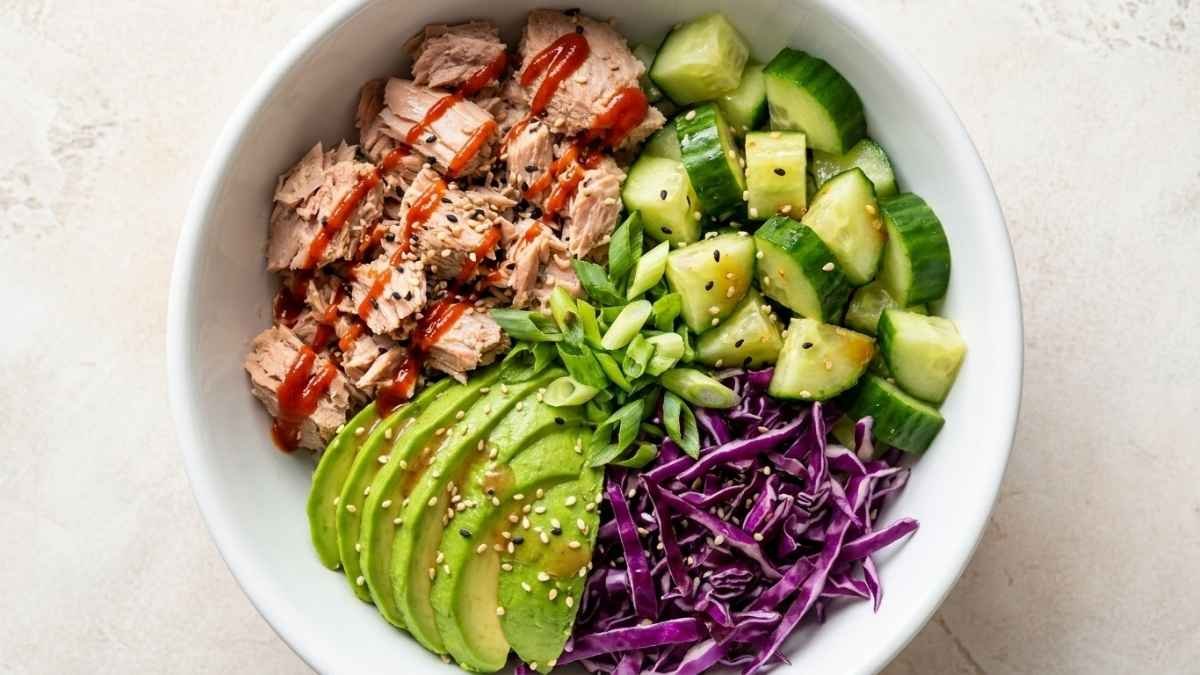
I used to think a good lunch meant standing over a stove for twenty minutes I didn’t have. This tuna protein bowl changed that. It comes together in the time it takes to drain a can of tuna and chop a cucumber, and it still feels like a real lunch, not diet food.
I started making this on the days my kids had after-school pickup back to back and I needed something in my stomach before the car line. My go-to brand for canned tuna is whatever pole-and-line or troll-caught option my grocery store has that week, since the texture holds up better than the cheapest cans. The first time I made this, I almost skipped the cabbage because I didn’t want to dirty another cutting board. I’m glad I didn’t.
The crunch against the soft avocado and tuna is what makes the whole bowl work, not just the protein count. Now it’s what I make when I want something that tastes like I tried, even on a day I didn’t have ten extra minutes to spare.
Heads up: this bowl contains fish, soy, and sesame. If you’re avoiding gluten, swap in a certified gluten-free tamari for the soy sauce.
Jump To Section
Ingredients for Tuna Protein Bowl
Here’s what I use, plus a few swaps that work if your pantry looks different from mine.
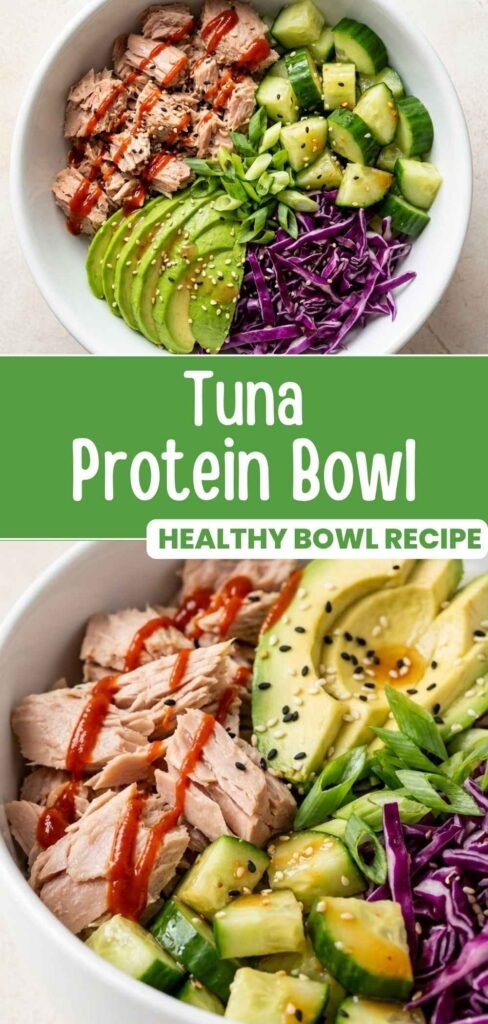
- 5 oz sustainable canned tuna
- 1/2 avocado, sliced or diced
- 1 cup cucumber, roughly chopped
- 1 cup red cabbage, shredded
- 1 scallion, roughly chopped
- 1 tbsp low-sodium soy sauce (or gluten-free tamari)
- 1 tbsp rice vinegar
- 1 tsp sesame oil
- Sesame seeds, for garnish
- Sriracha or sambal oelek, for drizzling
In my experience, sustainable pole-caught tuna has a firmer bite than the bargain cans, which matters since there’s no cooking to soften anything up. If you’re out of red cabbage, green cabbage or a handful of slaw mix works fine. Pro tip: buy the avocado a day or two ahead so it’s actually ripe when you need it, not rock hard at 12:15pm.
Don’t Lose This Recipe
Step-by-step instructions
I usually have this bowl built before my coffee finishes brewing. Here’s how I put it together.
Step 1: Drain the canned tuna well and transfer it straight to your serving bowl.
Step 2: Add the chopped cucumber, diced avocado, shredded red cabbage, and sliced scallion on top.
Step 3: In a small separate bowl, whisk together the soy sauce, rice vinegar, and sesame oil until it looks lightly cloudy and combined.
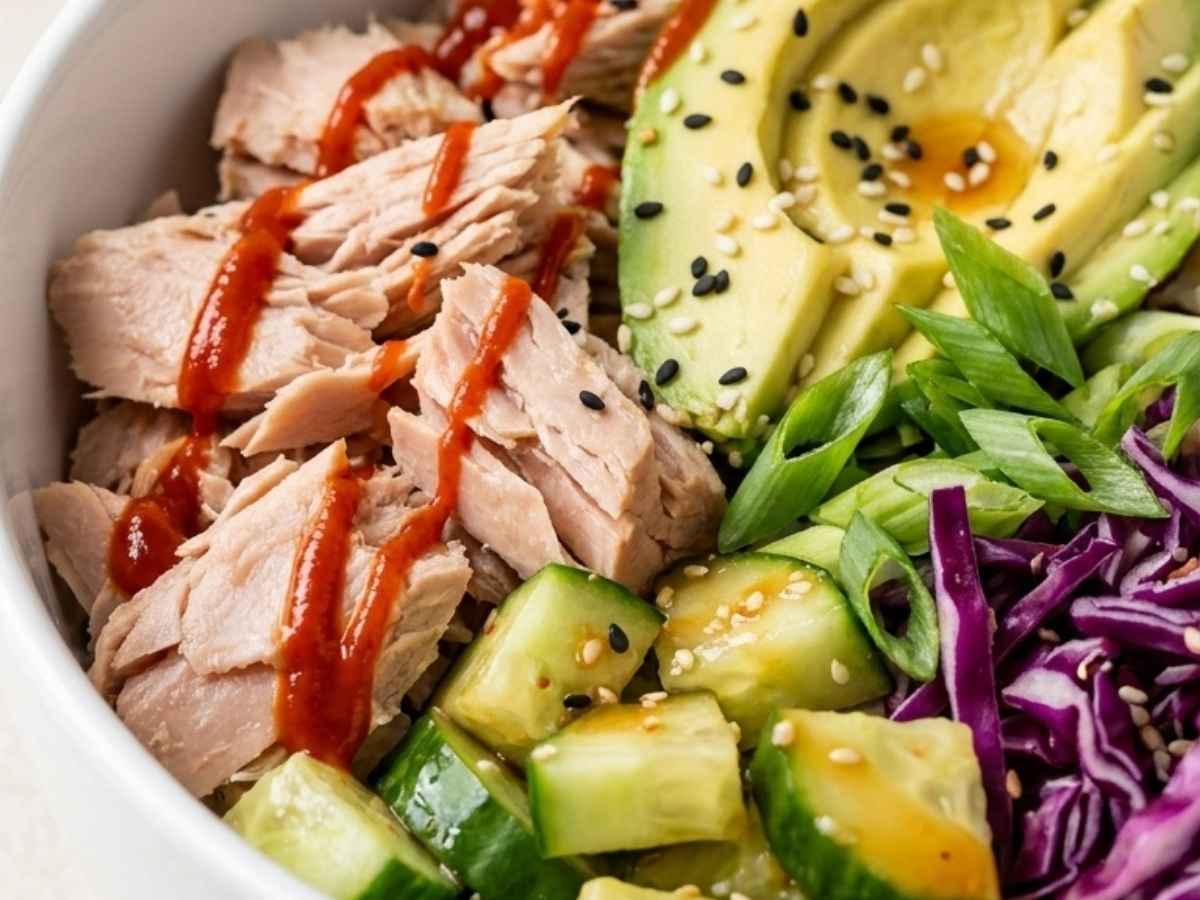
Step 4: Drizzle the dressing over the tuna and vegetables, then garnish with sesame seeds and a drizzle of sriracha or sambal oelek. Add as much heat as you like.

Tuna Protein Bowl
Ingredients
Equipment
Method
- Drain the canned tuna well and transfer it straight to your serving bowl.
- Add the chopped cucumber, diced avocado, shredded red cabbage, and sliced scallion on top.
- In a small separate bowl, whisk together the soy sauce, rice vinegar, and sesame oil until lightly combined.Whisk the dressing in a separate bowl instead of pouring the ingredients straight over the tuna. It keeps the sesame oil from pooling in one spot and means every bite gets seasoned evenly.
- Drizzle the dressing over the tuna and vegetables, then garnish with sesame seeds and a drizzle of sriracha or sambal oelek to taste.
Nutrition
Notes
Don’t Lose This Recipe
What to serve with Tuna Protein Bowl
This bowl is filling on its own, but a side or two rounds it out if you’re serving it for dinner.
Steamed edamame: adds another hit of plant protein and a little extra bite alongside the soft avocado.
Miso soup: a warm, savory side that balances the cold, crisp bowl without competing with the soy and sesame flavors.
Cucumber salad: if you want more crunch, a quick rice vinegar cucumber salad on the side echoes the dressing already in the bowl.
Seaweed salad: brings a briny note that plays well with the tuna, especially if you’re leaning into the poke-style flavors.
Storage & serving tips
This bowl is best eaten fresh, but the components hold up well separately for up to 3 days in the fridge if sealed tightly. Keep the avocado off until serving day since it browns fast.
If you’re meal prepping, drain and portion the tuna into containers first, then mix in the dressing right before eating instead of letting it sit soaked all week. My family loves when I pack the dressing in a small separate container so nothing gets soggy on the way to school lunches or the office.
For a change of pace, swap the tuna for canned salmon, spoon the mixture over rice instead of eating it plain, or wrap the whole thing in a large lettuce leaf for a lower-carb lunch on the go.
My favorite sauces for Tuna Protein Bowl
Since this bowl already leans into classic poke flavors, here are a few sauces I keep coming back to when I want to switch things up.
Spicy mayo: my go-to when I want something creamier, just Kewpie mayo whisked with sriracha, sometimes a splash of sesame oil. It’s a great, punchy contrast to the crunchy cabbage.
Ponzu: I reach for this one on hotter days, the citrus cuts through the avocado without drowning out the tuna.
Sweet soy glaze or eel sauce: what I use when my kids are eating the same bowl and can’t handle the sriracha. Sweet instead of spicy, still plenty of flavor.
Sesame-ginger dressing: my pick when I have a few extra minutes, fresh ginger whisked into the sesame oil and rice vinegar gives the whole bowl more depth.
Conclusion
I make this tuna protein bowl on the weeks I need lunch to be fast and actually worth eating, not just something to get through. It takes ten minutes, uses one can of tuna, and still leaves me full past 3pm. Keep the ingredients stocked and you’ll always have a real lunch option, even on the busiest days.