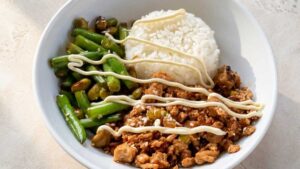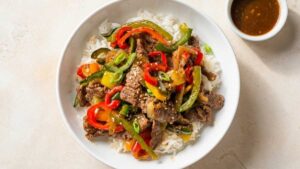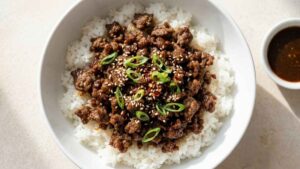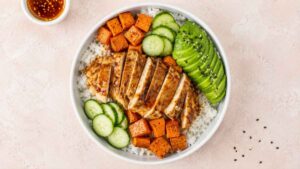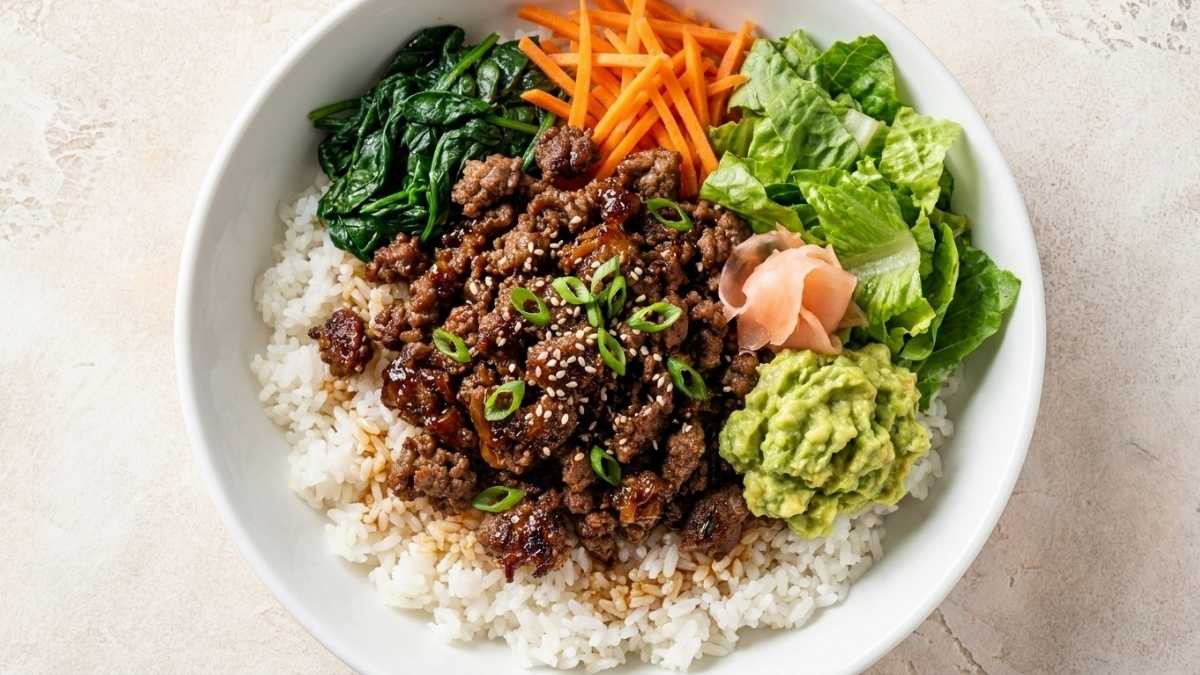
Korean Beef Bulgogi Rice Bowl are my answer for the nights when everyone is starving and I have exactly twenty five minutes before someone starts asking “is dinner ready yet” for the fourth time. Ground beef stands in for the traditional sliced steak, so you get all that sweet, garlicky bulgogi flavor without pulling out a mallet or waiting on a marinade.
I started making these on a random Tuesday when I had beef mince thawed in the fridge and no real plan. My son was doing homework at the counter, complaining about fractions, and I figured a quick stir fry situation was my best shot at getting everyone fed before it turned into a full meltdown. I grated an apple into the sauce because I remembered reading somewhere that it tenderizes the beef, and honestly, the smell that hit the kitchen when it started simmering stopped my daughter mid sentence. It’s very similar in spirit to my Korean Beef Rice Bowl, but comes together even faster since there’s no marinating time.
Jump To Section
Ingredients for Korean Beef Bulgogi Rice Bowl
Here’s what I use, plus a few swaps that work if your fridge looks different than mine tonight.
Contains: soy, sesame, and gluten (from the soy sauce and mirin). Swap in tamari for the soy sauce and check your mirin’s label if you need this gluten free.
For the beef:
- 500g / 1 lb ground beef, any fat percentage
- 1 tbsp canola oil (or any neutral oil)
- 2 tsp canola oil (for wilting the spinach)
Bulgogi sauce:
- 1 tbsp onion, finely grated (about 1/4 onion)
- 3 tbsp red apple, finely grated, skin on is fine (about 1/2 apple)
- 3 garlic cloves, finely grated
- 1 tsp ginger, finely grated
- 2 1/2 tbsp soy sauce, all purpose or light
- 1 tbsp sesame oil
- 1 tbsp mirin (omit for no alcohol)
- 1 tbsp brown sugar
- 1/8 tsp black pepper
Rice bowl drizzle sauce:
- 2 tbsp soy sauce, all purpose or light
- 1 tbsp sesame oil
- 2 tsp brown sugar
- 2 tsp rice vinegar (or apple cider vinegar)
For the bowl:
- White rice, medium or short grain if you can get it
- 4 large handfuls baby spinach (or chopped cabbage or kale)
- 1 large carrot, peeled and julienned or grated
- 1 avocado, mashed
- 1/4 cup pickled ginger
- 1 1/2 cups baby cos or romaine lettuce, torn into bite size pieces
- 1 tsp white sesame seeds
- 1 green onion, finely sliced
I always grate the apple and onion instead of dicing them. It’s a small step but it makes a real difference in how the sauce clings to the beef. If you’re short on time, a food processor works too, just pulse it a few times instead of running it continuously so you don’t end up with mush.
Don’t Lose This Recipe
Step-by-Step Instructions
My go to method here is doing both sauces first so the actual cooking takes ten minutes flat, no scrambling for a measuring spoon while the pan is hot.
Step 1: Mix the bulgogi sauce in one bowl and the rice bowl drizzle sauce in a separate bowl. Set both aside.
Step 2: Heat 2 teaspoons of oil in a large non stick pan over high heat. Add half the spinach and toss with tongs until semi wilted, about 30 seconds, then add the rest. Toss until fully wilted, about 1 minute, and remove to a bowl.
Step 3: Add 1 tablespoon oil to the same pan, still on high heat. Add the ground beef and cook, breaking it up as you go, until you no longer see any raw beef. Pour in the bulgogi sauce and let it simmer rapidly, stirring every so often, until the sauce is mostly evaporated. Keep stirring until the beef picks up a little caramelization on the edges but stays moist.
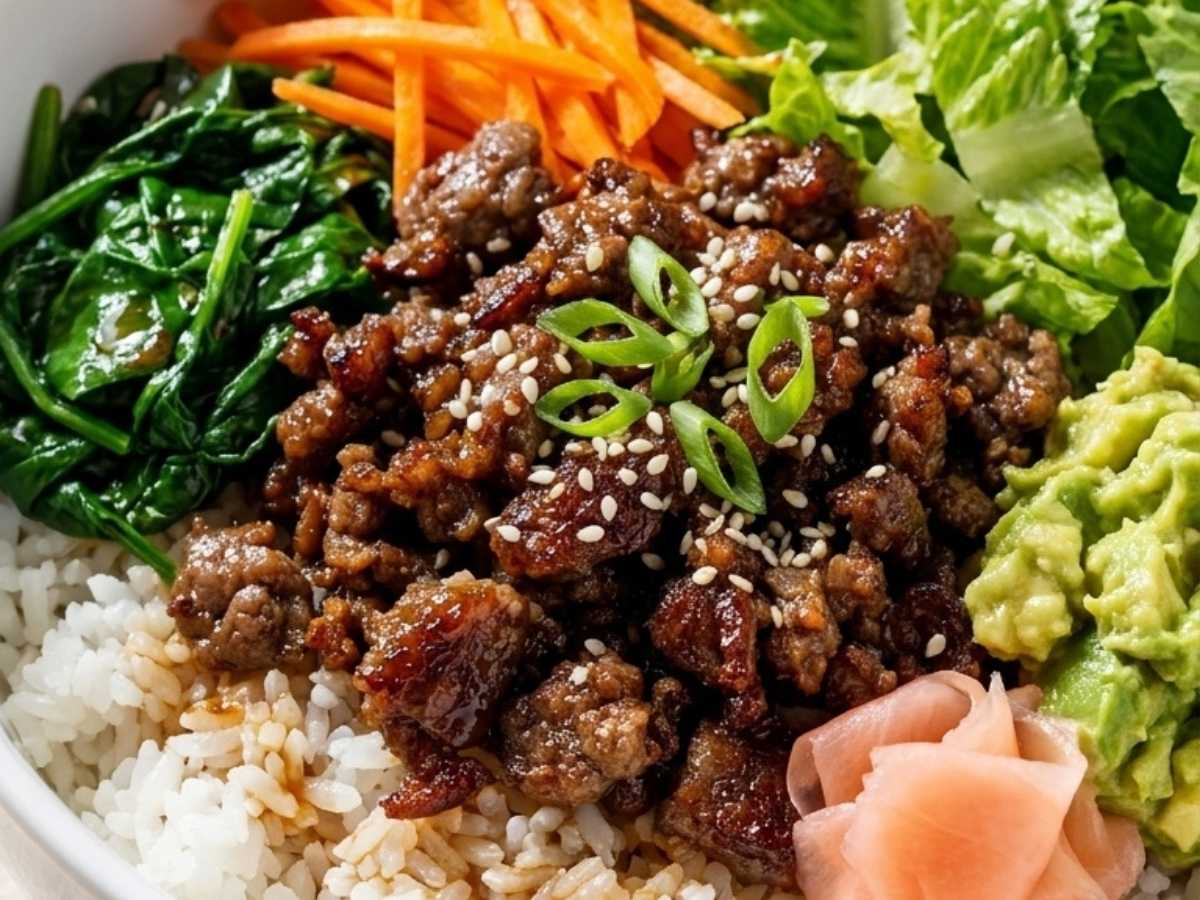
Step 4: Spoon the beef over warm rice, then add the spinach and carrot. Top with pickled ginger and a dollop of mashed avocado. Tuck the lettuce along the side of the bowl. Sprinkle with sesame seeds and green onion, then finish with the drizzle sauce right before serving.

Korean Beef Bulgogi Rice Bowl
Ingredients
Equipment
Method
- Mix the bulgogi sauce in one bowl and the rice bowl drizzle sauce in a separate bowl. Set both aside.
- Heat 2 teaspoons of oil in a large non-stick pan over high heat. Add half the spinach and toss until semi wilted, about 30 seconds, then add the rest. Toss until fully wilted, about 1 minute, and remove to a bowl.
- Add 1 tablespoon oil to the same pan, still on high heat. Add the ground beef and cook, breaking it up as you go, until no longer raw. Pour in the bulgogi sauce and simmer rapidly, stirring occasionally, until mostly evaporated. Keep stirring until the beef caramelizes slightly but stays moist.Pro tip: don’t rush this step. Once the sauce reduces down, the beef starts to catch on the edges of the pan, and that caramelization is where most of the flavor comes from.
- Spoon the beef over warm rice, then add the spinach and carrot. Top with pickled ginger and a dollop of mashed avocado. Tuck the lettuce along the side. Sprinkle with sesame seeds and green onion, then finish with the drizzle sauce right before serving.
Nutrition
Notes
Don’t Lose This Recipe
What to Serve With Korean Beef Bulgogi Rice Bowl
A few sides round these bowls out nicely, especially if you’re feeding a hungrier crowd or want to stretch the meal a little further.
Kimchi: The tangy, fermented heat cuts through the sweetness of the bulgogi sauce and adds a little crunch.
Cucumber salad: A quick toss of sliced cucumber with rice vinegar and sesame oil gives you something cold and crisp next to the warm beef.
Miso soup: A light, savory soup on the side rounds the meal out without competing with the bowl’s flavors.
Steamed edamame: An easy, protein packed side that my kids will actually eat without complaint, which counts for a lot on a weeknight.
If you want a beef bowl with more glaze and a saucier finish, my Mongolian beef rice bowl is another one in heavy weeknight rotation here.
Storage & Serving Tips
The cooked beef keeps well in an airtight container in the fridge for up to 3 days, or in the freezer for up to 3 months. In my experience, adding a small splash of water when reheating keeps it from drying out.
For meal prep, I like to store the beef, rice, and toppings separately and assemble the bowls fresh each day. The avocado especially holds up better when it’s mashed right before serving instead of sitting in the fridge overnight.
This recipe is easy to change up depending on what you have. Swap the rice for noodles or lettuce wraps, use ground turkey or chicken instead of beef, or add shredded cabbage or sauteed mushrooms if you want more vegetables in the mix.
My Favorite Sauces for Korean Beef Bulgogi Rice Bowl
The rice bowl drizzle sauce in this recipe is intentionally light, so if you want something with more punch to finish the bowl, these are the sauces I actually reach for in my own kitchen.
Spicy gochujang mayo: I just whisk mayonnaise with a spoonful of gochujang or sriracha. It’s my go-to when I want the bowl creamier and a little spicier without adding a whole new ingredient list.
Ssamjang: This thick, savory Korean dipping paste is strong enough to carry a spoonful of flavor on its own. I love it with meat-heavy bowls like this one because a little goes a long way.
Gochujang based sauce: I stir together gochujang, soy sauce, sesame oil, and a little brown sugar. Sometimes I’ll add a splash of pear juice if I have it, since it plays nicely with the apple already in the bulgogi marinade.
Doenjang based drizzle: This fermented soybean paste brings a deeper, earthier savoriness. I thin it out with a little water or rice vinegar and drizzle it over the rice and beef when I want something less sweet.
I usually keep a jar of gochujang in the fridge just for moments like this. A spoonful stirred into mayo or a light vinaigrette turns a normal weeknight bowl into something that tastes like it took more effort than it did.
Conclusion
I keep coming back to these bowls because they deliver real bulgogi flavor without the cost or the wait of a proper marinade. Between the caramelized beef, the crunch of the fresh veggies, and whichever sauce I’m in the mood for that night, it’s one of the few dinners my whole family agrees on without any negotiating. If you try it, I’d start with the apple and onion in the sauce exactly as written, and if you’re in more of a steak mood than a stir-fry mood, my garlic butter steak bowl scratches a similar itch.