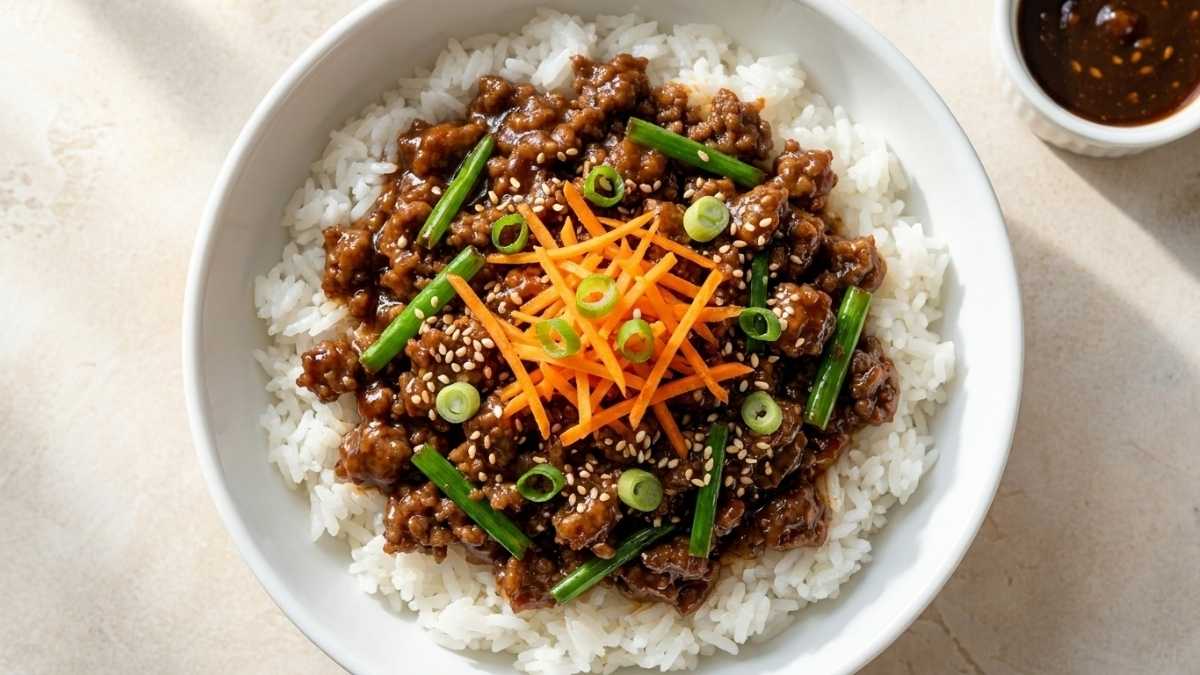
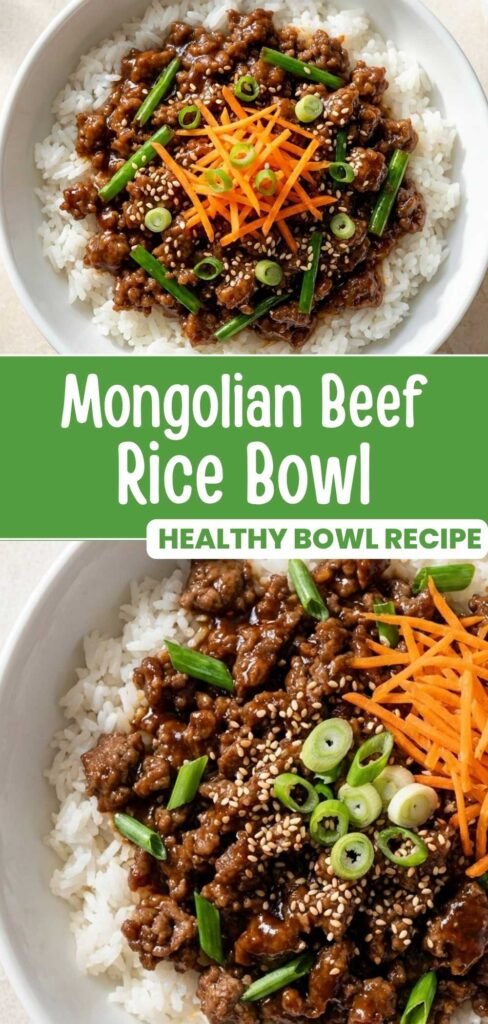
If you need a Mongolian Beef Rice Bowl on the table fast, this is the one I make on repeat. It’s ground beef simmered in a sweet, garlicky sauce, piled over rice with a few crunchy toppings. Fifteen minutes, one pan, and dinner is done.
My oldest asked for “the brown sauce beef” three nights in a row last winter, which is how I knew this recipe had earned a permanent spot in my dinner rotation. I started making it with ground beef instead of sliced steak because it’s what I usually have thawed, and honestly, I like it better this way. It soaks up the sauce in every bite instead of just on the surface.
My go-to move on busy nights is starting the rice first, then the beef comes together in the time it takes the rice to finish steaming. It’s the same trick I use for my sticky chicken bowl when I want dinner done just as fast. By the time everyone’s at the table, the kitchen smells like garlic and ginger and there’s already a fight over who gets the last spoonful of sauce. Here’s how I put the bowl together.
Jump To Section
Ingredients for Mongolian Beef Rice Bowl
Here’s what I use for this bowl, plus a few swaps that work if you’re missing something. Nothing here is fancy, it’s mostly pantry staples.
For the beef:
- 1 lb. lean ground beef
- 2 tsp minced ginger
- 3 cloves garlic, minced
- 1/2 cup low sodium soy sauce
- 1/4 cup brown sugar
- 3 tbsp hoisin sauce
- 1/4 cup water
- 2 tbsp cornstarch
- 1/4 tsp red pepper flakes
- 1/4 tsp black pepper
- 4 green onions, cut into 2 inch pieces
For the bowls:
- 3 cups cooked white or jasmine rice
- 1/2 cup shredded carrots
- 1 tbsp sesame seeds
- Extra sliced green onion, for garnish
Allergen note: this recipe contains soy and sesame, and most soy sauce and hoisin also contain wheat, so it’s not gluten-free as written. Swap in tamari and a gluten-free hoisin if you need it.
I always use low sodium soy sauce here since the hoisin already brings plenty of salt on its own. In my experience, freshly minced ginger and garlic make a real difference over the jarred stuff, but jarred works fine on a night when you’re short on time. If you want a lower carb bowl, cauliflower rice swaps in easily for the white rice.
Don’t Lose This Recipe
Step-by-Step Instructions
My usual method is getting the rice going first, since the beef only takes about ten minutes from start to finish.
Step 1: Brown the ground beef along with the ginger and garlic in a skillet over medium-high heat, breaking it up as it cooks, until it’s fully crumbled and no longer pink. Drain any excess fat and return the pan to the stove.
Step 2: Combine the soy sauce, brown sugar, and hoisin sauce in a small dish and pour it into the beef. Cook for 2 to 3 minutes to let the flavors blend, you’ll notice the sauce start to smell sweet and a little sharp from the garlic. Meanwhile, stir the water and cornstarch together in a separate small dish. Pour that slurry into the beef and stir until the sauce thickens and coats the meat, about a minute.
Step 3: Season with red pepper flakes, black pepper, and the green onions. Pro tip: if the sauce looks too thick once it cools slightly, a splash of water loosens it right back up.
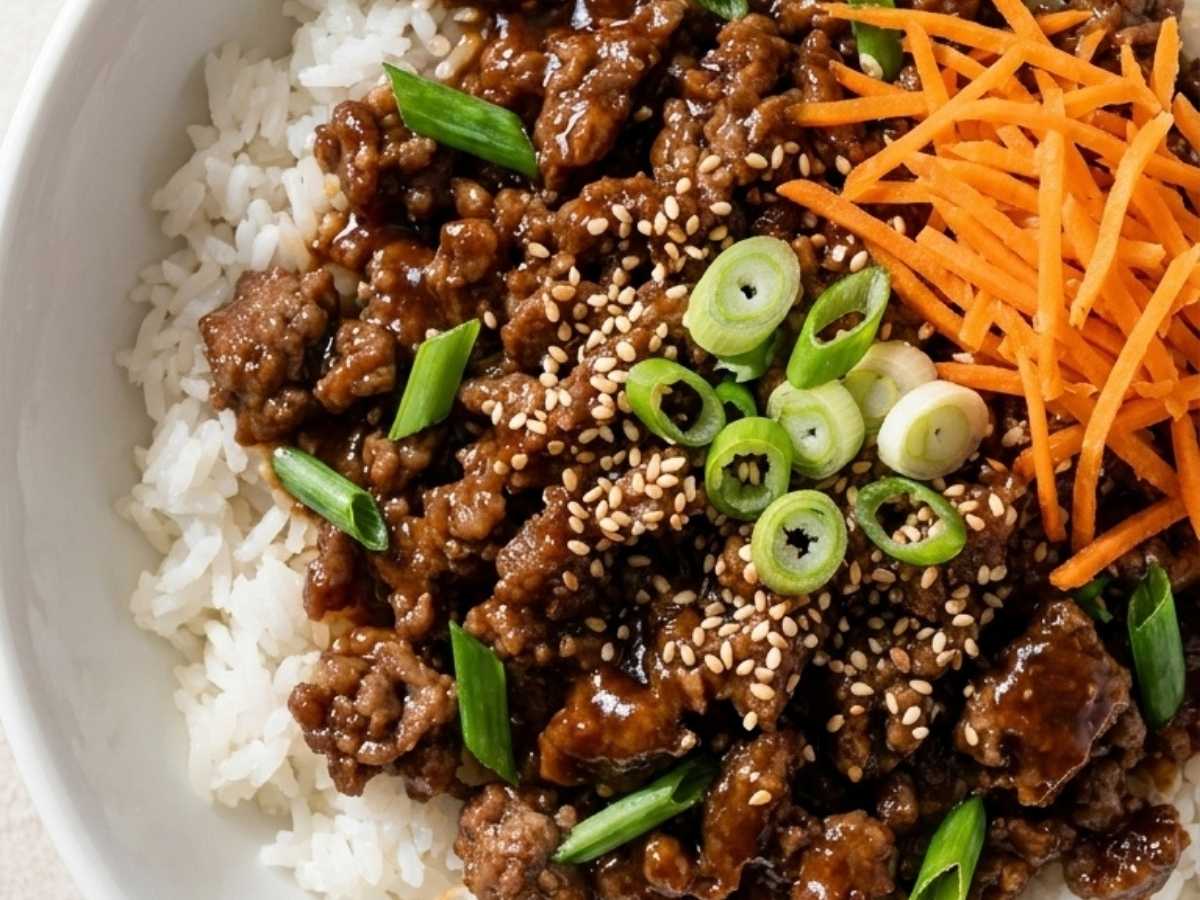
Step 4: Divide the rice among 4 bowls. Top each with the Mongolian beef, a scattering of shredded carrots, a sprinkle of sesame seeds, and extra green onion. Serve while it’s hot.

Mongolian Beef Rice Bowl
Ingredients
Equipment
Method
- Brown the ground beef along with the ginger and garlic in a skillet over medium-high heat, breaking it up as it cooks, until fully crumbled and no longer pink. Drain any excess fat and return the pan to the stove.
- Combine the soy sauce, brown sugar, and hoisin sauce in a small dish and pour into the beef. Cook for 2 to 3 minutes to blend the flavors. Meanwhile, stir the water and cornstarch together in a separate small dish, then pour the slurry into the beef and stir until the sauce thickens.
- Season with red pepper flakes, black pepper, and the green onions.If the sauce looks too thick once it cools slightly, a splash of water loosens it right back up.
- Divide the rice among 4 bowls. Top each with the Mongolian beef, shredded carrots, sesame seeds, and extra green onion. Serve hot.
Nutrition
Notes
Don’t Lose This Recipe
What to Serve With Mongolian Beef Rice Bowl
This bowl is rich and a little sweet, so I like sides that add crunch or a cooling contrast.
- Steamed broccoli: it soaks up extra sauce and adds a fresh, green bite next to the richer beef.
- Quick cucumber salad: cold and crisp, it cuts through the sweetness of the sauce.
- Egg rolls or dumplings: if I’m feeding a hungry crowd, these round out the meal without much extra effort.
- Edamame with flaky salt: an easy, protein-packed side the kids actually eat without complaint.
Storage & Serving Tips
Leftovers keep well in an airtight container in the fridge for up to 4 days. I usually store the rice and beef separately so the rice doesn’t turn mushy from the sauce.
To reheat, warm the beef in a skillet over medium heat with a splash of water to loosen the sauce back up, then microwave the rice separately until hot. This bowl is also great for meal prep. I portion it into containers on Sunday and have lunch ready for half the week.
Swap the rice for noodles or cauliflower rice, or use ground turkey or chicken instead of beef if that’s what’s in your freezer. It also works wrapped in lettuce cups for a lighter, low carb option.
My Favorite Sauces for Mongolian Beef Rice Bowl
Since the beef already comes with a sweet, savory sauce, I like adding something with a little heat or brightness on top. Here are a few that work especially well with this bowl.
- Sriracha mayo: a creamy, spicy drizzle that plays well against the sweetness of the hoisin and brown sugar in the beef.
- Chili garlic sauce: for a punch of heat and extra garlic, spoon a little right over the top before serving.
- Sesame ginger dressing: a lighter option that adds brightness and echoes the ginger already in the beef. It’s also what I drizzle over my sesame chicken bowl.
- Gochujang sauce: if you want something deeper and spicier, a small drizzle of this Korean chili paste sauce works beautifully here.
- Sweet chili sauce: for anyone at the table who wants extra sweetness without extra heat, this is an easy add. It’s the same sauce I lean on for my sweet chili chicken bowl.
Conclusion
This Mongolian Beef Rice Bowl has become one of those recipes I fall back on without thinking twice, especially on nights when takeout sounds tempting but I’d rather just cook. It’s fast, it uses ingredients I almost always have on hand, and my kids ask for seconds every time. It sits right alongside my honey garlic chicken rice bowl and my orange chicken bowl in the nights I don’t want to think too hard about dinner. Give it a try this week and see if it earns a spot in your rotation too.